Naxos Driving Tips — Roads, Rules & Practical Guide
Search & Compare Naxos Car Rentals
Free cancellation on most vehicles
Naxos Island Road Network Overview
Naxos is the largest Cycladic island, covering 429 km². The road network runs about 30 km north to south and 20 km east to west. Most main roads on Naxos are paved asphalt. Standard rental cars handle the western beaches and central mountain villages well. The east coast and remote southern beaches require more caution. No destination on Naxos is more than about one hour from Chora. This car hire naxos guide covers traffic rules, road conditions, fuel stations, parking, and driving distances.
Greek Traffic Rules and Regulations on Naxos
Driving in Greece follows national traffic law, and Naxos police enforce those rules. Vehicles drive on the right and overtake on the left.
Naxos has no motorways or expressways. Naxos roads are urban or rural roads. Outside built-up areas, the standard limit for cars is 90 km/h (Law 5209/2025, art. 24). Safe speeds on Naxos mountain roads are often closer to 40-50 km/h. In built-up areas the default limit has been 30 km/h since 1 January 2026, rising to 50 km/h only on roads with at least two lanes per direction or a central divider.
The Greek BAC limit is 0.05% for standard drivers. New drivers with less than two years of experience and motorcyclists face a 0.02% limit. Fines and suspensions for drink driving are severe.
Greek law requires seatbelts for all occupants. Children under 12 or under 135 cm must use an appropriate child restraint system compliant with ECE R44/04 or i-Size R129 standards.
Using a handheld mobile phone while driving requires a hands-free system. Greek traffic rules also impose heavy penalties for red-light violations and serious speeding.
Roundabout priority on Naxos depends on signage. At unsigned roundabouts, local practice may differ from standard European expectations.
Passenger cars do not have a general daytime running light requirement under Greek law, but most post-2011 EU vehicles have DRLs fitted as standard.
Greek car rental agencies accept EU and EEA driving licences. National licences from the UK, US, Canada, and Australia are often accepted without an IDP under current Greek rules.
Car Hire Naxos Road Conditions by Route
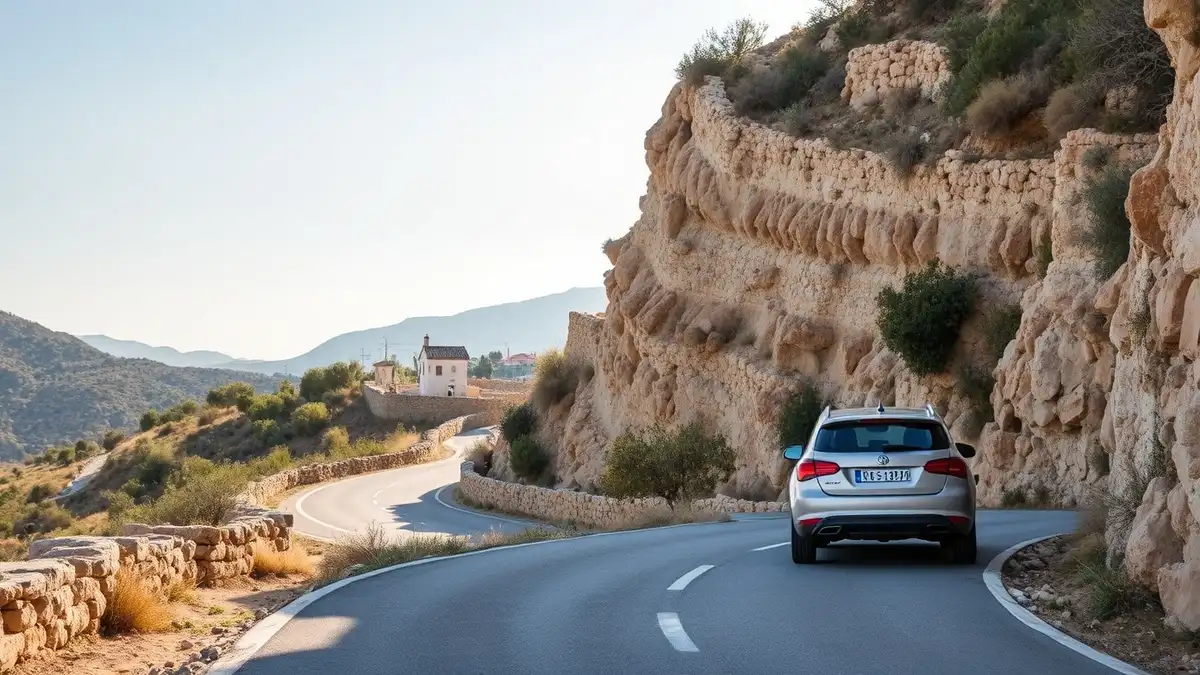
West Coast Beach Road (Chora to Plaka)
The road from Chora to Agios Prokopios and Agia Anna is a paved two-lane asphalt road. South of Agia Anna, the coastal road toward Plaka Beach and Mikri Vigla includes gravel sections. A fully paved alternative runs above the western beaches via the airport road. Summer traffic is heavier here because of beach traffic, buses, and pedestrians. Some local rental agencies recommend higher-clearance vehicles for frequent access to rougher beach sections.
Mountain Road (Chora to Apiranthos)
The route through Chora, Halki, Filoti, and Apiranthos is fully paved. The elevation changes are steady rather than extreme. Standard economy cars can handle this route. Village streets in Halki, Filoti, and Apiranthos are very narrow, so drivers should fold mirrors when needed and yield to oncoming traffic.
North Road to Apollonas
The interior road to Apollonas is about 50 km from Chora and usually takes about one hour. The road passes through Halki, Filoti, Apiranthos, Koronos, and Komiaki on paved but winding asphalt. The northwest coastal return road is more exposed, with wind, drops, and tight sections. Nervous drivers should use the interior road both ways.
Apiranthos to Moutsouna Descent
The road from Apiranthos to Moutsouna drops from about 650 metres to sea level over 5 km of hairpins. The road is paved and buses use it regularly. Drivers should use engine braking on the descent and avoid riding the brakes continuously.
Remote Naxos Beaches
Alyko requires a paved road followed by a short sandy track of about 200 metres. Standard cars usually manage that approach. Psili Ammos is now reached by paved road, but the final approach is narrow and steep. Kalantos requires a 10.8 km unpaved dirt track with rough sections. Standard rental cars are not suitable for Kalantos.
Night Driving on Naxos
Night driving outside Chora is best avoided. Rural roads have limited lighting and many bends. Drivers may also encounter goats, sheep, and hedgehogs on the road.
Naxos Fuel Stations and Refueling Rules
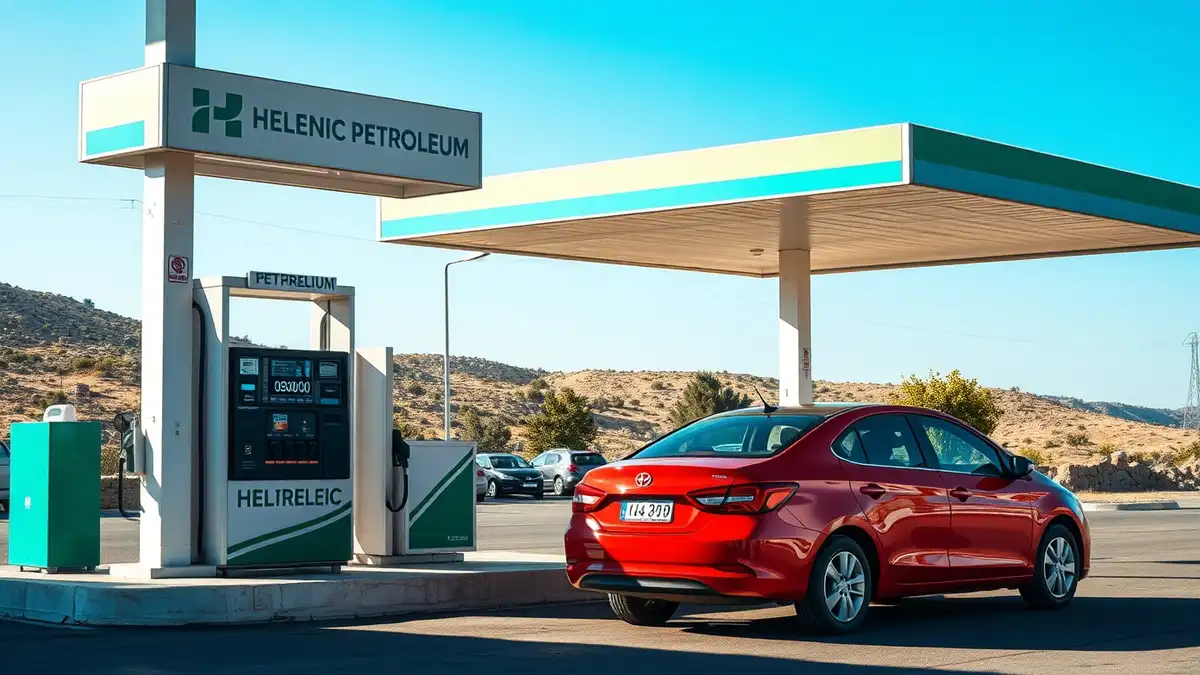
Naxos has about 5 to 8 fuel stations. Most stations are in Chora and along the central corridor through Vivlos, Sangri, Halki, Moni, and Filoti. The last fuel station for northern routes is in Komiaki, past Filoti. There are no fuel stations in Apollonas, on the east coast, or along the remote south coast beaches.
Fuel on Naxos costs about €1.95-2.10 per litre for unleaded 95 and €1.85-2.00 for diesel. Island prices are usually above mainland Greece. Filling a 50-litre tank may cost €5-10 more than in Athens. For more cost details, see our car hire prices in Naxos guide.
Most fuel stations open Monday to Saturday from about 6:30 AM to 9:30 PM. Many close on Sundays. No 24-hour station is confirmed. Greek stations are usually full-service, with attendants pumping fuel. Most stations accept cards.
Drivers should refuel in Chora or Filoti before driving north to Apollonas, east to Moutsouna, or south to remote beaches.
Naxos Parking Guide and Regulations
Parking on Naxos is usually free. Naxos does not generally operate paid parking zones, parking meters, or parking apps. Beach parking is usually informal gravel or dirt parking near the sand.
Chora is the main exception. Parking in Chora can be difficult in July and August. The Old Town and Kastro are pedestrian areas. Drivers usually rely on free municipal lots near the port or roadside spaces along the seafront. Arriving before 10:00 AM improves the chances of finding a space.
Parking near the Portara is limited. Many drivers leave the car near the port and walk about 10 minutes to the monument. In Halki, Filoti, and Apiranthos, drivers should park at the village entrance and continue on foot.
The Hellenic Police enforce parking rules on Naxos. Illegal parking in Chora can lead to fines and plate confiscation.
Need a Car for These Routes?
Compare fleet options suited to Naxos gravel, hairpins, and long coastal drives.
Compare Car Hire DealsNaxos Driving Distances from Chora
| Destination | Distance | Drive Time |
|---|---|---|
| Naxos Airport (JNX) | 3 km | 5 min |
| Agios Prokopios | 5–6 km | 10–12 min |
| Agia Anna | 7 km | 12–15 min |
| Plaka Beach | 8–10 km | 15–20 min |
| Mikri Vigla | 15–17 km | 20–25 min |
| Kastraki | 15–18 km | 25–30 min |
| Halki village | 16 km | 20–25 min |
| Filoti village | 18–20 km | 25–30 min |
| Apiranthos | 28–30 km | 35–45 min |
| Apollonas (north) | ~50 km | 55–65 min |
| Moutsouna (east) | 36–41 km | 50–60 min |
| Alyko (south) | 18 km | ~25 min |
The western beach loop from Chora to Kastraki and back is about 35 km. The mountain village loop through Halki, Filoti, and Apiranthos is about 60 km round trip. A full island circuit to Apollonas and back can reach about 100 km.
Explore the best stops along these routes in our things to do in Naxos guide.
Seasonal Driving Conditions on Naxos
Summer Driving (June–August)
Summer temperatures on Naxos average about 29°C and can rise above 35°C. Air conditioning is important. Traffic is heaviest in Chora and on the western beach road. Rural roads stay quieter.
Meltemi Wind Driving (Mid-July to Mid-August)
Meltemi winds usually blow at Force 4-7 and can reach Force 8+. Crosswinds affect coastal and mountain roads. Smaller rental cars and ATVs feel the wind more strongly. Sand can blow across beach roads, and ferry cancellations can affect port pickup schedules.
Shoulder Season Driving (May, September–October)
May, September, and October usually offer the easiest driving conditions. Temperatures are milder, traffic is lighter, and parking is easier.
Winter Driving (November–April)
Naxos winters are mild. January highs average about 14°C. Snow is rare and usually limited to Mt. Zas. Roads stay open, but surfaces are wetter. Some businesses, including rural fuel stations, close in the low season.
Practical Navigation and Safety Tips
Google Maps works on Naxos, but it does not always distinguish paved roads from gravel tracks. Offline maps are useful. Maps.me and OsmAnd may be more accurate on smaller rural roads.
Cosmote, Vodafone, and Nova operate 4G networks on Naxos. Coverage is strongest in populated areas and weaker in the mountains and on the east coast.
Main tourist routes usually have Greek and English signs. Remote areas may have fewer signs and more Greek-only signage.
Local driving customs on Naxos can differ from mainland habits. Some drivers sound the horn before blind bends, pull right to let faster traffic pass, and use headlight flashes as hazard warnings.
Passenger cars share the road with ATVs and quad bikes. ATVs are slower, less stable in wind, and less predictable. Drivers should leave extra space when overtaking.
Naxos Emergency Contact Numbers
- European Emergency Number: 112
- Hellenic Police: 100
- Greek Ambulance Service: 166
- ELPA Roadside Assistance: 10400 — elpa.gr